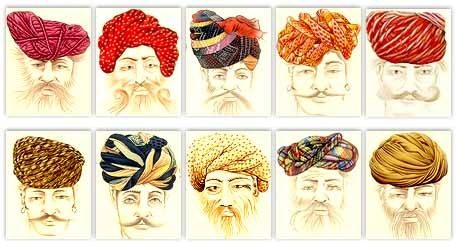
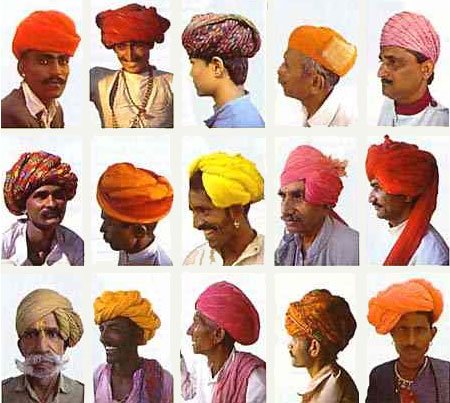
People of different caste and of different regions used to wear different type of turbans according to their convenience and local factors at different occasions.
You can identify an individual’s caste, creed , religion, region based on his “Paag” , and ”Style of wrapping”.
The style of turban changes every 15 km. And there are more than 1000 kinds of turban types and their styles of wearing.
In Rajasthan turbans are according to Different Communities and Different Occasions.
UN secretary yesterday in the world conference declared Kerala as the Environment capital of the world. He appreciated the Environment awareness of the people of this small south Indian state, known as God’s own country.
They voluntarily leave their vehicles in their garages on few days of every month reducing environmental pollution, and Global warming.
He urged all countries to follow this practise, widely known as ‘Hartal’
Kerala in past 6 months had 79 Hartals which help reduce carbon from air tremendously !!
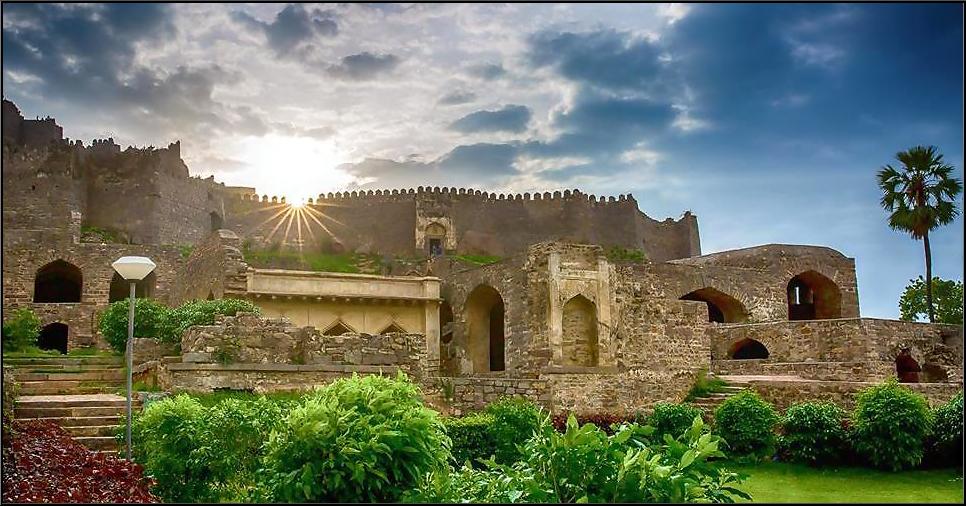
Golkonda, also known as Golconda, Gol konda (“Round shaped hill”), or Golla konda, is a citadel and fort in Southern India and was the capital of the medieval sultanate of the Qutb Shahi dynasty (c.1518–1687), is situated 11 kilometres (6.8 mi) west of Hyderabad.
The Golkonda Fort used to have a vault where once the famous Koh-i-Noor and Hope diamonds were stored along with other diamonds.
During the Renaissance and the early modern eras, the name “Golkonda” acquired a legendary aura and became synonymous for vast wealth. The mines brought riches to the Qutb Shahis of Hyderabad State, who ruled Golkonda up to 1687, then to the Nizam of Hyderabad, who ruled after the independence from the Mughal Empire in 1724 until 1948, when the Indian integration of Hyderabad occurred.
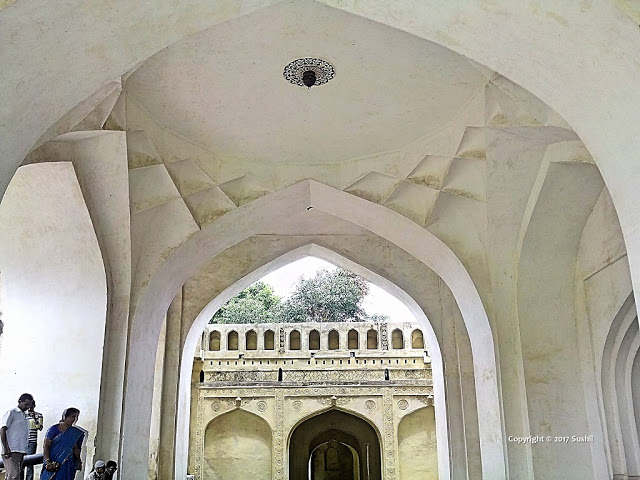
The Golkonda fort is listed as an archaeological treasure on the official “List of Monuments” prepared by the Archaeological Survey of India under The Ancient Monuments and Archaeological Sites and Remains Act. Golkonda actually consists of four distinct forts with a 10 km long outer wall with 87 semicircular bastions (some still mounted with cannons), eight gateways, and four drawbridges, with a number of royal apartments and halls, temples, mosques, magazines, stables, etc. inside. The lowest of these is the outermost enclosure into which we enter by the “Fateh Darwaza” (Victory gate, so called after Aurangzeb’s triumphant army marched in through this gate) studded with giant iron spikes (to prevent elephants from battering them down) near the south-eastern corner. At Fateh Darwaza can be experienced a fantastic acoustic effect, characteristic of the engineering marvels at Golkonda. A hand clap at a certain point below the dome at the entrance reverberates and can be heard clearly at the ‘Bala Hisar’ pavilion, the highest point almost a kilometer away. This worked as a warning note to the royals in case of an attack.
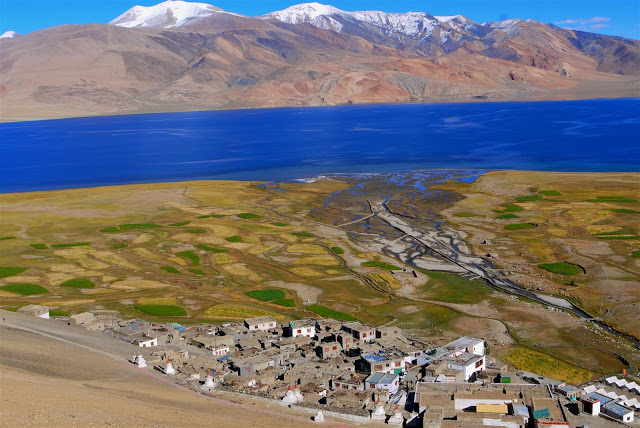
The extreme limit of cultivation is at Korzok, on the Tso-moriri lake, at 4,600 m are widely considered to be the highest fields in the world.
The highest fields in the world
2. The Bailey Bridge is the highest bridge in the world
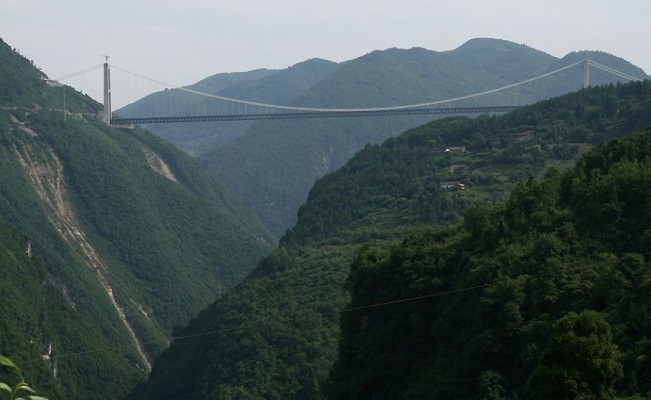
A Bailey bridge between the Suru River and Dras River in Ladakh, India is the highest bridge in the world at an altitude of 5,602 metres above sea level. It was built in 1982 by the Indian Army.
The Bailey Bridge is the highest bridge in the world
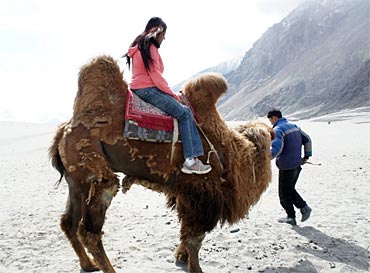
3. Only place in India where Twin Humped Camels can be found
The Bactrian camel (two-humped) is a large, even-toed ungulate native. The Bactrian camel has two humps on its back, in contrast to the single-humped dromedary camel, they are rare compared to single hump camels. These camels are one of the main attraction of the Nubra valley in Ladakh.
Only place in India where Twin Humped Camels can be found
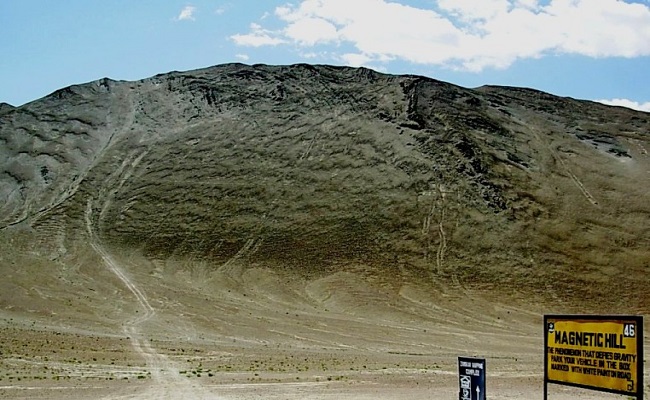
4. Ladakh is home to the Mystical Magnetic Hill
Magnet Hill is a so-called “gravity hill” located near Leh in Ladakh, India. The “Hill” is located on the Leh-Kargil-Srinagar national highway, about 30 km from Leh, at a height of 11,000 feet above sea level. The alignment of the road with the slope of the background can give the illusion that cars are able to drift upwards.
Ladakh is home to the Mystical Magnetic Hill
5. Ladakh is the Highest Plateau in the state of Kashmir
Ladakh is the highest plateau of state of Kashmir with much of it being over 3,000 m. It extends from the Himalayas to the Kunlun Ranges and includes the upper Indus River valley.
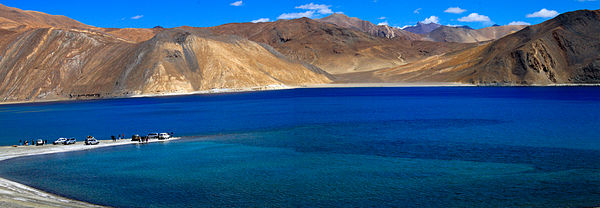
6. The Pangong Lake in Ladakh is one Of the Highest Salt Lakes in the world
Pangong Tso means “high grassland lake” in Tibetan language , also referred to as Pangong Lake, is an endorheic lake in the Himalayas situated at a height of about 4,350 m. During winter the lake freezes completely, despite being saline water.
Ladakh is the Highest Plateau in the state of Kashmir
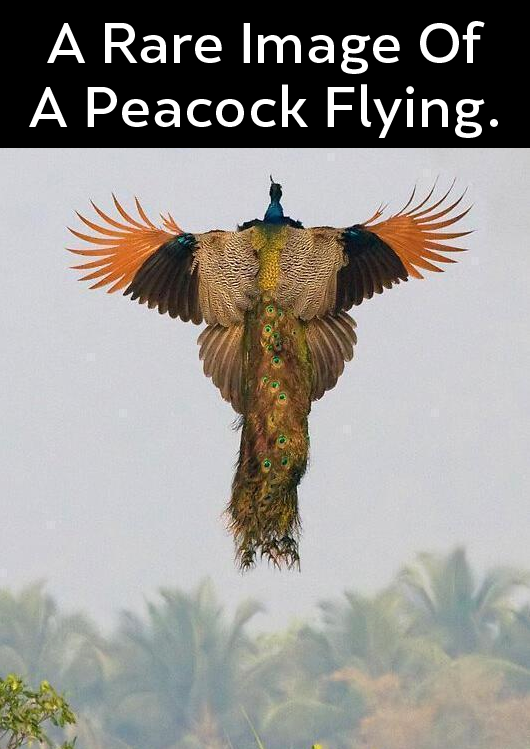
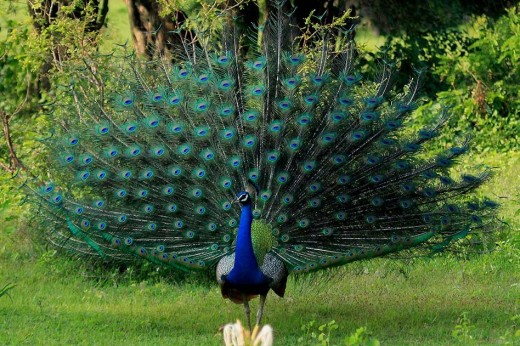
Peacock – the National Bird of India. Peacocks are large, colorful pheasants (typically blue and green) known for their iridescent tails. These tail feathers, or coverts, spread out in a distinctive train that is more than 60 percent of the bird’s total body length and boast colorful “eye” markings of blue, gold, red, and other hues. The large train is used in mating rituals and courtship displays. It can be arched into a magnificent fan that reaches across the bird’s back and touches the ground on either side. Females are believed to choose their mates according to the size, color, and quality of these outrageous feather trains.