Enjoy you best ever Christmas in India with CozyNuk.com

Press here for north India tour packages, south India tour packages, Rajasthan tour packages, Kerala tour packages.

Visit : fairs & festivals in India

Enjoy you best ever Christmas in India with CozyNuk.com
Press here for north India tour packages, south India tour packages, Rajasthan tour packages, Kerala tour packages.
Visit : fairs & festivals in India
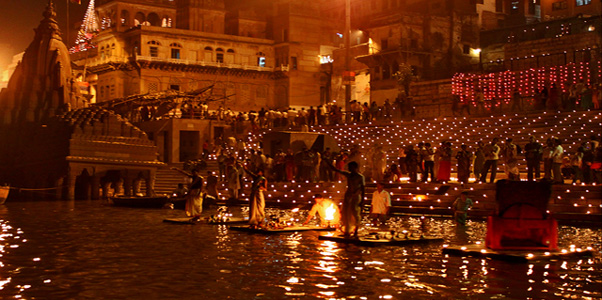
It is believed that Ganga nourishes the Varanasi civilization for long and it has been a great religious importance in the Hindu society. It provides the people a great sense of different identity and belonging. For the religious and cultural beliefs of the people to the River Ganges, a festival of Ganga Mahotsav is organized every year. People at Varanasi celebrate Ganga Mahotsav continuously for 5 days at the banks of the River Gange.

tours to Varanasi – North India Tour Packages
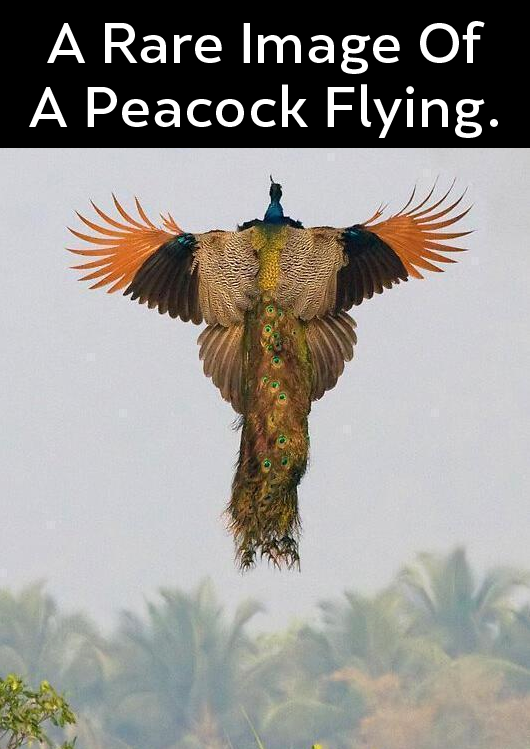
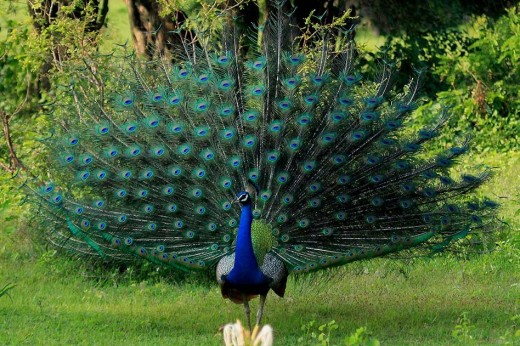
Peacock – the National Bird of India. Peacocks are large, colorful pheasants (typically blue and green) known for their iridescent tails. These tail feathers, or coverts, spread out in a distinctive train that is more than 60 percent of the bird’s total body length and boast colorful “eye” markings of blue, gold, red, and other hues. The large train is used in mating rituals and courtship displays. It can be arched into a magnificent fan that reaches across the bird’s back and touches the ground on either side. Females are believed to choose their mates according to the size, color, and quality of these outrageous feather trains.
Peacock is found in Rajasthan in big numbers.
For Rajasthan Tour Packages press here


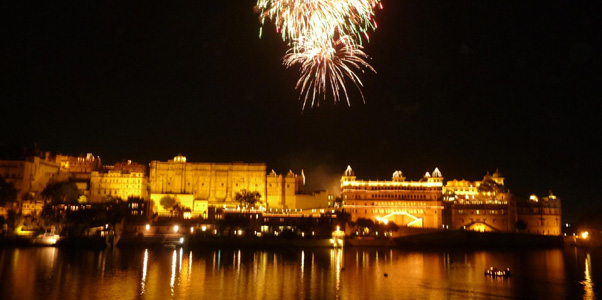
Deepawali or Diwali is certainly the biggest and the brightest of all Hindu festivals. It’s the festival of lights (deep = light and avali = a row i.e., a row of lights) that’s marked by four days of celebration, which literally illumines the country with its brilliance, and dazzles all with its joy. Each of the four days in the festival of Diwali is separated by a different tradition, but what remains true and constant is the celebration of life, its enjoyment and goodness.
Celebrate Diwali in a royal way in Jaipur.
Happy October 2015
Winters ahead and migratory birds has started arriving to Indian sub-continent.
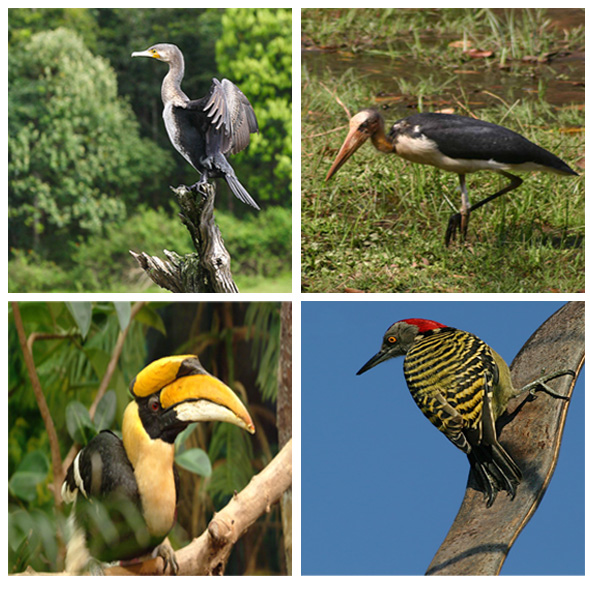
Keoladeo Ghana National Park, Bharatpur
Best place for the ornithologist and for the people who likes to spend the entire day in bird watching. The park is the host of 230 species of birds, among them some are migratory. The wonderful flying view and the melodious songs of birds always encourages the naturalist, poets and authors to write their best theme sitting amidst the nature.
for more info visit press here : Migratory Birds in India

India and Nepal are a shoppers paradise. Shopping could be a pleasant experience. You may get best selection and bargains in handcrafted jewelry, wooden handicraft, precious & semi precious stones, marble, handmade marble statues, carpets, rugs, silk, handmade paper, handmade paper products and leather goods. Shopping is suggested from reputable shops. Most of them will ship your merchandise in time but it is advisable to bring your purchases with you or ship yourself.
North India – List of cities / states with products known for:
| Destination | Products |
| Delhi | Garments, fabrics, leather, bags, footwear etc. |
| Jaipur | Garments, handicraft articles, precious & semi precious stones, jewelry, wooden furniture, marble, marble statues, sandstone, carpet, handmade paper products etc. |
| Agra | Carpet, footwear, handicraft articles, leather, garments etc. |
| Bikaner | Namkeen, Jewelry, spices etc. |
| Jodhpur | Handicraft articles, wooden furniture, garments, precious & semi precious stones, spices, granite, textile etc. |
| Udaipur | Minerals, wooden furniture, marble, namkeen, incense sticks etc. |
| Varanasi | Incense sticks, sarees, fabrics, spices, carpet, silk etc. |
South India – List of cities / states with products known for:
| Destination | Products |
| Mumbai | Jeans, garments, umbrella, fabrics, furniture etc. |
| Goa | Cashew, Liquor etc. |
| Munnar | Tea |
| Kerala | Spices, bags, ayurveda, furniture, footwear, umbrella, coir etc. |
| Chennai | Leather, furniture, bags etc. |
| Mahabalipuram | Statues etc. |
| Kanchipuram | Silk Sarees, silk etc. |
| Madurai | Towel, granite, furniture, papad, umbrella, incense sticks, candles etc. |
| Thanjavur | Candle, paper cups etc. |
| Kanyakumari | Fishnet, honey, paper cups etc. |

India is a great destination for travelers of all different budgets. In terms of a holiday, India has pretty much all climates and sceneries on earth and that fact that it won’t bankrupt you only makes it a more attractive destination.
From accommodation to transport, guides to meals; we have included a short guide below about what you will potentially spend. This can help you effectively plan your journey to India and enjoy your holiday all the more. Whether you are a backpacker, a modest traveler, a luxury-lover or someone who wants to see everything the country has, this country can fit your budget.
We have separated this article into four ranges; Backpacker, Budget, Mid-range and Luxury. Remember that these rates will change depending on the season, hotels, activities, type of transport etc.
Backpacker (20-30$ / 15-20€ per day/per person)
For the backpacker, you can stay in basic accommodation, eat out in modest establishments and obviously sample some of the amazing street food. You will be able to use local buses and non air-conditioned trains. The value for backpackers is that they really immerse themselves in the culture of this wonderful country.
Budget (35-55$ / 25-40€ per day/per person)
This is a modest calculation for the budget traveler. If you really are a diehard backpacker, you can actually live in India for less than this. However, this calculation will include stay in budget hotels, home-stays and cheap dormitories. You will be able to travel in local government and sometimes private transport and non air-conditioned trains. Monuments in India can cost more and the cost will obviously depend on how much you want to see.
Mid-range (55-80$ / 40-60€ per day/per person)
The mid-range budget is what most travelers to India will live on. With this amount of money per day you can really experience some of the places that this fantastic country has to offer. You can stay in interesting hotels such as ‘havelis’ and even old manor houses and palaces where the royalty used to live. You will be able to have a chauffeur and car, some flights, air-conditioned trains and buses. Although there are loads of different types of eateries you can go to, a mid-range restaurant will set you back between 20-25$ or 15-20€.
Luxury (110-160$ / 80 -120€ per day/per person)
There are some of the best and most luxurious hotels in the world in India. You can have 5star treatment, incredible world and local cuisine, a large car with chauffer, internal flights according to your timetable, guides or escorts and much more. Take in mind that larger metropolis cities will be marginally more expensive (such as Delhi, Mumbai, Kolkata). As a note, the super-high end hotels will probably set you back from 200€ per day per person.
Travelers take note:
Foreign travelers are generally charged more to enter tourist sites than local tourists. Sometimes the change in price can be very alarming, but it is controlled by the Tourism Board of India and therefore beyond our control. There will be additional charges for cameras.
Larger cities like Delhi and Mumbai will be more expensive than other cities, especially the hotels. High season between November and January/February is the most expensive time of the year to travel.
There is lots of opportunity to eat out in India, ranging from simple street food (which is extremely tasty) at around 50INR to medium-range restaurants costing around 400INR up to the high-end establishments which will set you back around 1500INR.
The history of Incredible India is one of the grand epics of world history and can be best described in the words of India’s first Prime Minister Jawaharlal Nehru as “A bundle of contradictions held together by strong but invisible threads”. Indian history can be characterized as a work in progress, a continuous process of reinvention that can eventually prove elusive for those seeking to grasp its essential character.
The history of this astonishing sub continent dates back to almost 75000 years ago with the evidence of human activity of Homo sapiens. The Indus Valley Civilization which thrived in the northwestern part of the subcontinent from 3300- 1300 BCE was the first major civilization in India.
The Pre Historic Era
1. The Stone Age:

The Stone Age began 500,000 to 200,000 years ago and recent finds in Tamil Nadu (at C. 75000 years ago, before and after the explosion of the Toba Volcano) indicate the presence of the first anatomically humans in the area. Tools crafted by proto-humans that have been dated back to two million years have been discovered in the Northwestern part of the country.
2. The Bronze Age:

The Bronze Age in the Indian subcontinent dates back to around 3300 BCE with the early Indus Valley Civilization. Historically part of ancient India, it is one of the world’s earliest, urban civilizations, along with Mesopotamia and Ancient Egypt. Inhabitants of this era developed new techniques in metallurgy and handicraft and produced copper, bronze, lead and tin.
Early Historic Period
1. Vedic Period:

Vedic Period is distinguished by the Indo-Aryan culture which was associated with the texts of Vedas, sacred to Hindus, and that were orally composed in Vedic Sanskrit. The Vedas are some of the oldest extant texts, next to those in Egypt and Mesopotamia. The Vedic era in the subcontinent lasted from about 1500-500 BCE, laying down the foundation of Hinduism and other cultural dimensions of early Indian society. The Aryans laid down Vedic civilization all over North India, particularly in the Gangetic Plain.
2. Mahajanapadas:

This period saw the second major rise in urbanization in India after the Indus valley Civilization. The word “maha” means great and the word “janapada” means foothold of a tribe. In the later Vedic Age a number of small kingdoms or city states had mushroomed across the subcontinent and also find mention in early Buddhist and Jain literature as far back as 1000 BCE. By 500 BCE, sixteen “republics” or Mahajanapadas has been established, namely; Kasi, Kosala, Anga, Magadha, Vajji (or Vriji),Malla, Chedi, Vatsa (or Vamsa), Kuru, Panchala, Matsya, Surasena, Assaka, Avanti,Gandhara, and Kamboja.
A. Persian and Greek Conquests:
Much of the Northwest subcontinent (currently Afghanistan and Pakistan) came under the rule of the Persian Achaemenid Empire in C. 520 BCE under the rule of Darius the Great and remained so for two centuries. In 326 BCE, Alexander the Great conquered Asia Minor and the Achaemenid Empire, when he reached the Northwest frontier of the Indian subcontinent he defeated King Porus and conquered most of Punjab.
B. Maurya Empire:
The Maurya Empire, ruled by the Mauryan Dynasty from 322-185 BCE was a geographically extensive and mighty political and military empire in ancient India, established in the subcontinent by Chandragupta Maurya in Magadha (present day Bihar) and was it further thrived under Ashoka the Great.
3. The Mughal Empire:
In 1526, Babur, a descendant of Timur and Gengis Kahn from Fergana Valler (present day Uzbekistan) swept across the Khyber Pass and established the Mughal Empire which covered modern day Afghanistan, Pakistan, India and Bangladesh. The Mughal dynasty ruled most of the Indian subcontinent till 1600; after which it went into decline after 1707 and was finally defeated during India’s first war of Independence in 1857.
4. Colonial Era:

From the 16th century, European powers such as Portugal, Netherlands, France and the United Kingdom established trading posts in India. Later, they took advantage of internal conflicts and established colonies in the country.
5. The British Rule:
The British Rule in India began with the coming of the British East India Company in 1600 and continued till Indian independence from British rule in 1947.
6. The Indian Independence Movement and Mahatma Gandhi:
In the 20th century Mahatma Gandhi led millions of people in a national campaign of non-violent civil disobedience to contain independence from the British.
7. Independence and Partition:

Religious tension between the Hindus and Muslims had been brewing over the years, especially in provinces like Punjab and West Bengal. The Muslims were a minority and they did not feel secure in the prospect of an exclusively Hindu government and hence made them wary of independence. All through this Mahatama Gandhi called for unity among the two religious groups. The British, whose economy had been weakened after World War 2, decided to leave India and participated in the formation of an interim government. The British Indian territories gained independence in 1947, after being partitioned into the Union of India and the Dominion of Pakistan.